0571-26692003
No. 181 Geyazhuang, Xihu District,Hangzhou, Zhejiang, P.R. China


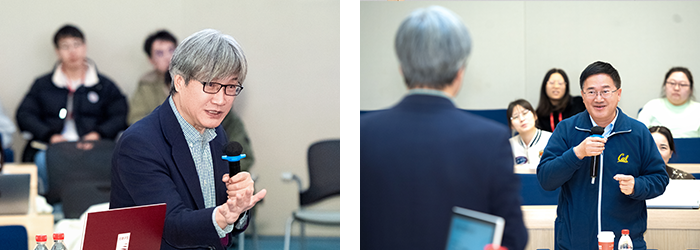
Professor Wang Bo opens the lecture by revisiting Liang Shuming’s well-known question, “Will this world become better?”, emphasizing that a better future depends on the integration of science and the humanities, as well as the complementary strengths of Eastern and Western traditions. Drawing on the practices of humanities education at the Massachusetts Institute of Technology (MIT), the talk highlights the necessity of integrating the humanities with advanced technologies in order to cultivate innovative talents equipped with cross-cultural communication skills and a broad humanistic vision.
Informed by Albert Einstein’s reflections, Professor Wang further argues that technological development should always remain centered on human concerns. The lecture then turns to Confucian and Daoist thought to examine two contrasting yet complementary humanistic spirits, elucidating the wisdom of love and tolerance embodied in the ideals of “benevolence toward others” and “forgetting oneself amid the rivers and lakes.” It also reflects on the distinctive value of the humanities as the “usefulness of the useless.” The talk concludes by proposing that science and technology should work in concert with the humanities, so as to promote technology for the common good while preserving necessary spaces for reflection and restraint.